A booking system, not a redesign

They're already brilliant at online booking.
Just not on their own website.

This Edinburgh centre rents out rooms and has two guest rooms upstairs. The guest rooms are on Airbnb, where they're a Superhost with 115 reviews and four years of hosting. The rooms downstairs are still booked by filling in a form and waiting for an office that opens three days a week.

Where the money goes

They lose 14% on every booking they could have taken themselves

That's the gap between what the platform keeps and what the same booking would cost on their own website. It isn't my estimate — it comes straight from Airbnb's own published figures.

Illustration: a coin passed towards a building's doorway while a hand lifts a wedge-shaped slice out of it on the way, so a smaller coin arrives

Booked through Airbnb

Of everything the guest pays…

16% lost to Airbnb

Booked on their own site

Guest pays exactly the same price…

2% card fee — you pay that either way

From Airbnb's own worked example, 29 July 2026. Card fee at Stripe's UK rate; an overseas card costs a little more, closer to 4%.

Same guest. Same price. 14p more in every pound reaching the building.

Nobody pays extra for this — the difference is the platform's cut, not the customer's bill. It's the same booking, made somewhere else.

The honest part

Airbnb earns its cut. It puts them in front of tourists who have never heard of the place, and that's worth paying for — so the system I built links out to Airbnb rather than trying to replace it.

This only applies to the guests who were coming anyway: the returning visitor, the person already on the Centre's website, the workshop attendee who needs a bed for the night. Those bookings go through a platform for no reason other than that there's no other way to make them.

And it's about to get worse

The fee isn't theirs to control

While I was checking these numbers, Airbnb was in the middle of changing them. They're merging the two fees into a single 15.5% charge taken from the host, and it's already compulsory for some. Anyone who doesn't put their prices up to absorb it takes home about 13% less per night — on Airbnb's own worked example, for the same room, on the same night.

The Centre may or may not be in the group that has to switch — that's Airbnb's decision, not theirs. Which is exactly the point. You can't plan around a number somebody else changes. A booking taken on your own website costs what your card processor charges, and nothing else.

Sources: Airbnb service fees and Simplifying Airbnb service fees, both checked 12 August 2026. Card rates from Stripe UK pricing, same date.

And that's only the two rooms upstairs

Downstairs, nothing can be booked at all

The guest rooms are the part that works. The six rooms they hire out to yoga teachers, therapists and community groups are still booked by filling in a form and waiting. Three things fall out of that.

The office is open twelve hours a week. People book at nine on a Sunday night.

Wednesday, Thursday and Friday, ten until two. Outside that, a booking can't be confirmed by anybody — the enquiry just sits there. Their own What's On calendar carries a note admitting it doesn't reflect what's actually free.

156 hours out of every 168, the answer to "can I have the room?" is nobody's to give.

Now Anyone can see what's free and take it, at any hour, without the office being open.

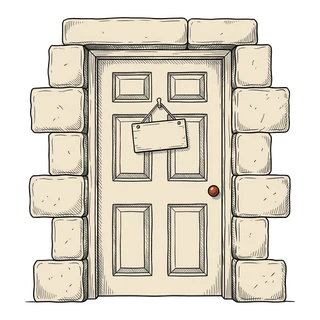
Illustration: a closed office door with the blind down at night, and three people waiting outside with bags and rolled-up yoga mats

Almost every booking is the same booking again.

Their calendar has 1,653 sessions coming up. Only eight of them are one-offs — everything else is a weekly class that repeats, term after term, in the same room at the same hour.

And every term, somebody re-types them by hand, walking the diary date by date looking for clashes.

Now A whole term goes in at once, with every date checked against the diary in one go.

Illustration: a person copying the same entry over and over into an enormous ledger, beside a towering stack of identical completed pages

A teacher who's ill on a Friday waits until Wednesday.

That's the next time anyone is there to answer. So the class doesn't happen, the room sits empty for want of a phone call — and nobody else can book it either, because as far as the website is concerned it was never free.

An empty room earns nothing, and it's the least visible way a building loses money.

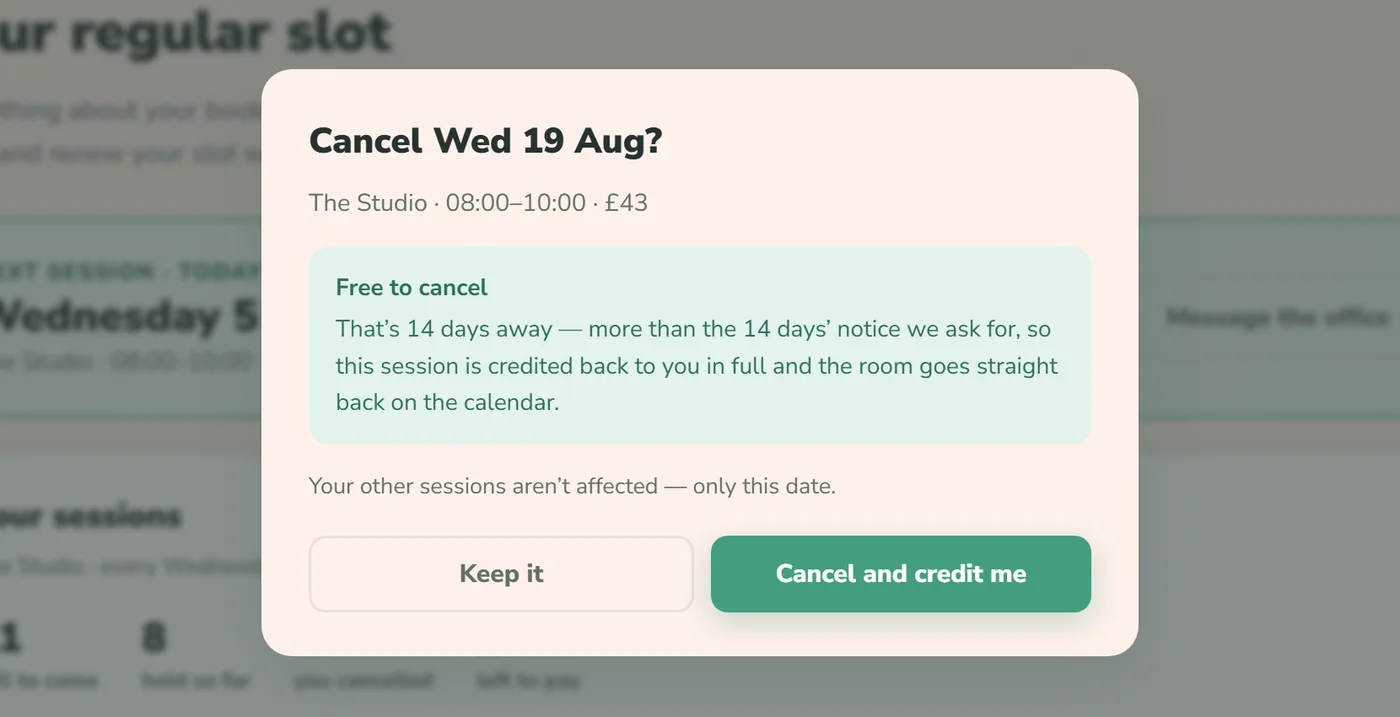
Now They release the date themselves, get credited, and the room goes straight back on the calendar.

A dialog reading: Cancel Wed 19 Aug? Free to cancel — that's 14 days away, so this session is credited back to you in full and the room goes straight back on the calendar.

What I built

So I built them the other way

A working booking system on their own site, using their real rooms and their real published rates. Nobody asked me to — I'd rather show than pitch.

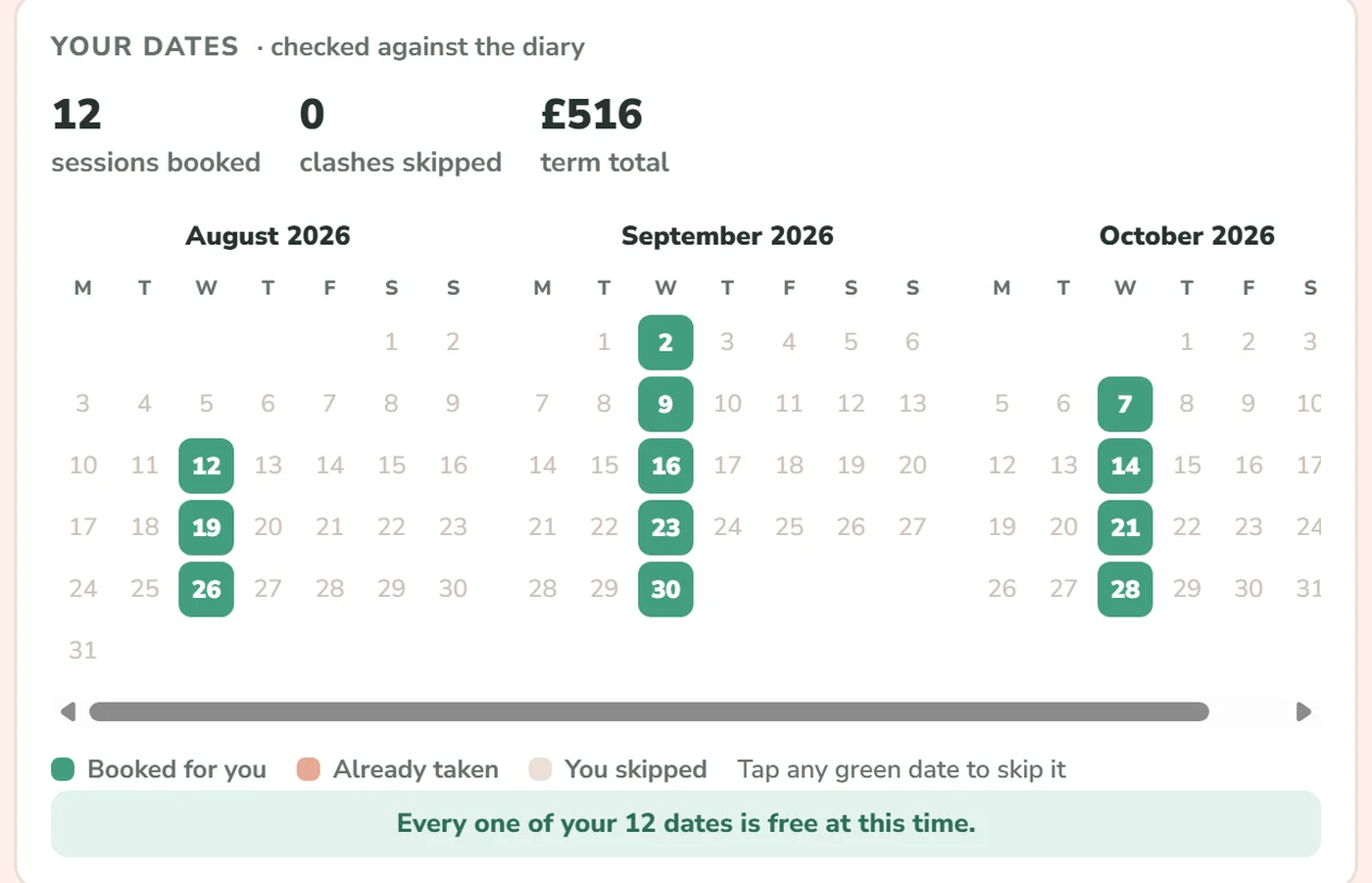
A term of twelve weekly sessions, with every date checked against the diary: 12 sessions booked, 0 clashes skipped, and three months of calendar with each date marked
A whole term, checked in one go. Pick a day and a time, and every date in the term is tested against the diary at once — clashes flagged, skippable one by one, with the total priced before you commit. This is the job the office currently does by hand.
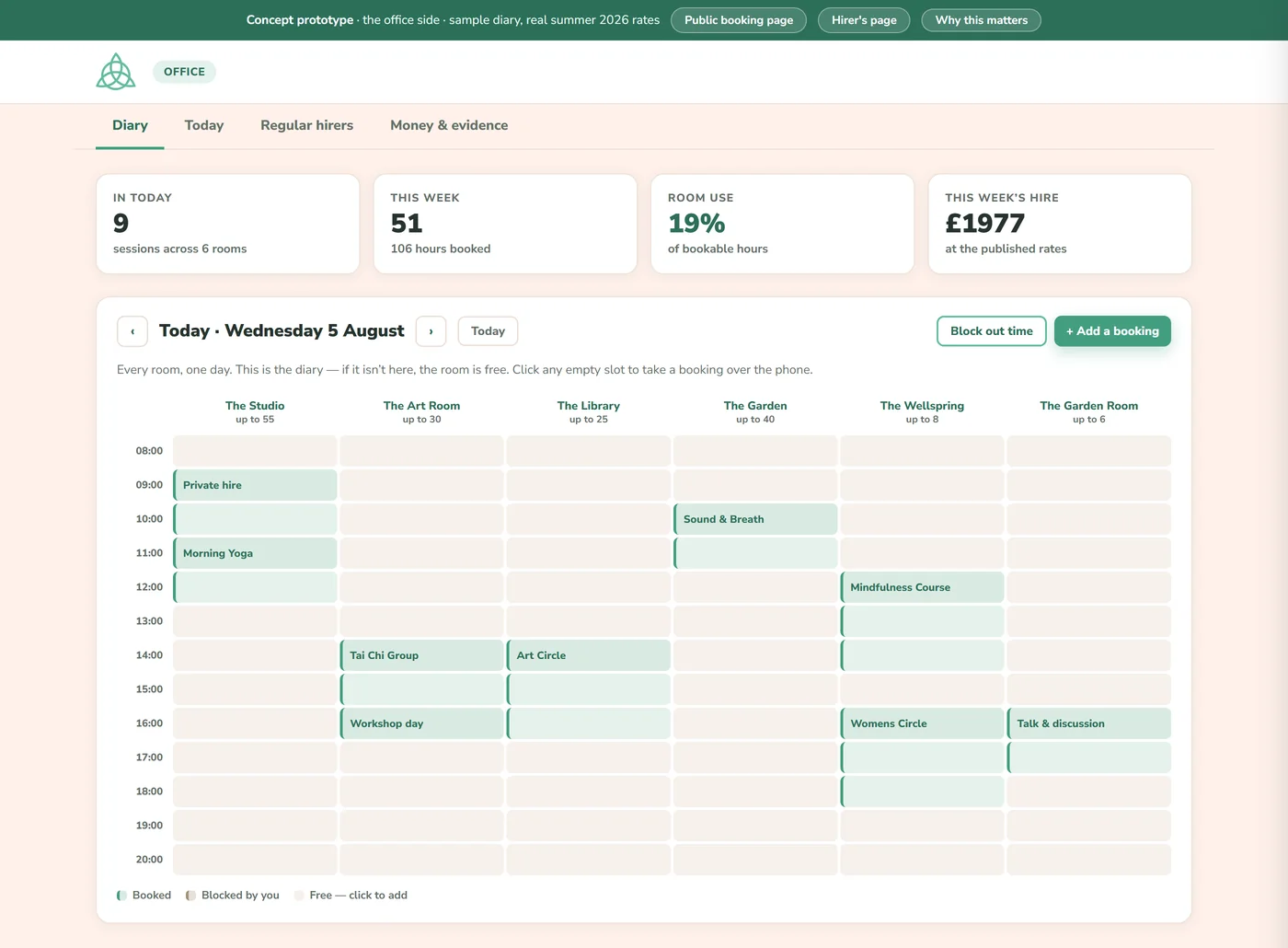
The office diary: every room across one day, with tiles showing sessions today, hours booked this week, room use as a percentage, and the week's hire value
And the office gets a real diary. Every room, one screen, replacing a calendar that says in writing it isn't representative. Phone bookings go straight in and block the room everywhere at once — and the occupancy and income figures a funder asks for come out of the system instead of somebody's memory.

Hiring a room today

  1. Fill in an enquiry form
  2. Wait for the office to open — three days a week, four hours a day
  3. Emails back and forth to find a time that's free
  4. Sign three separate documents
  5. Get an invoice, pay it later

Hiring a room with the system

  1. See what's actually free, at nine o'clock on a Sunday night
  2. Pick it and pay by card
  3. Sign once — all three documents together

The same building. The same rates. The difference is whether somebody has to be at a desk for the booking to happen.

Paying a platform to take your own bookings?

Tell me which one and I'll work out what it's costing you — the same way I did here, from the platform's own published figures.

Redesign my website — free

Back to all work