
Free pilot · Taking 3 UK charities
I'll redesign your charity's website — for free.
Your website is read by funders, families and volunteers deciding whether to trust you. I redesign small charities' websites so they earn that trust — free, yours to keep, and a short testimonial is the only thing I ask for. There's no budget to find, no brief to write and no afternoon to clear — send me your web address, or your Facebook page if that's all you have, and I'll take it from there.
Send me your website
Thanks — I'll be in touch within one working day.
I'll take a first look at your site before I reply, so you'll hear something useful, not a form letter.
The offer
What you get
-
 A complete redesign — the homepage and every other page that earns its place — see what that looks like.
 -
 Built for a charity your size — the handful of pages a funder or a family actually opens, done properly.
 -
 Yours to keep — free, with no obligation to continue afterwards. You own everything: the code, the content, the domain. It sits on your own hosting, or in a free account opened in the charity's name — and you hold the password, so anyone you choose can change the site at any time. Where your website lives, in plain English.
And these come as standard, whether you think to ask for them or not:
-

Found on Google
Every page is written so a search engine can read it — real headings, real text, a clear description of what the page is for. I can't promise you first place; nobody honest can. I can promise your website stops working against you.
-

Built for a phone first
Most people who look you up will do it on a phone, standing somewhere. So that's what I design for first. Big text, buttons a thumb can hit, and nothing you have to pinch and zoom to read. It then scales up to a laptop, not the other way round.
-

Readable by everyone
Built to WCAG 2.2 AA, the accessibility standard the public sector has to meet. Strong contrast, text that scales, a site you can use with a keyboard alone, and images described for screen readers. Some of the people you serve need that. So do some of your funders.
The process
How it works — three steps, minutes of your time
-
Say yes
Send me your current website address. That's the only thing I need to start.
-
I redesign your site
I do the full redesign — free, and with no work needed from you.
-
You review it
Love it? It's yours to keep. All I ask is an honest review and a short testimonial.
The catch
Why free? No catch — here's the honest reason.
I'm a UK web designer building my portfolio, and I'd rather show what I can do than talk about it. So I'm redesigning websites for a handful of small charities at no cost. You get a modern website. I get your honest review and a short testimonial I can show future clients. That's the whole deal. Nothing is waiting for you in the small print.
It's also why I do all of it. Sector-wide, 63% of small charities say squeezed finances are their biggest barrier to digital — and half say they simply don't have the capacity to take it on. So the deal is shaped for that: no cost, and no work needed from you beyond a yes and a review. (Charity Digital Skills Report 2026)
Which leaves the three things people ask once they believe the free part:
-
Where it's hosted
In a free GitHub account that holds the files, and a free Cloudflare account that shows them to the world. Both opened in the charity's name, with a password only you know. If you'd rather it sat on your own hosting, I'll hand those files over instead. The whole thing explained in plain English.
-
Who owns it
You do. The code, the words, the photos and your web address. Nothing is licensed to you and nothing is rented — it's yours the same way your filing cabinet is. Hand it to a different developer next year and they get everything, with no permission needed from me.
-

What it costs to keep
Nothing to me. No monthly fee, no licence, no contract, nothing to cancel. Hosting is free at your size, and so is the editor you'll use to change things. The only bill is the one you already pay — the yearly renewal on your web address, usually £10 to £20. If you don't own one yet, I'll show you where to get it.
Before → After
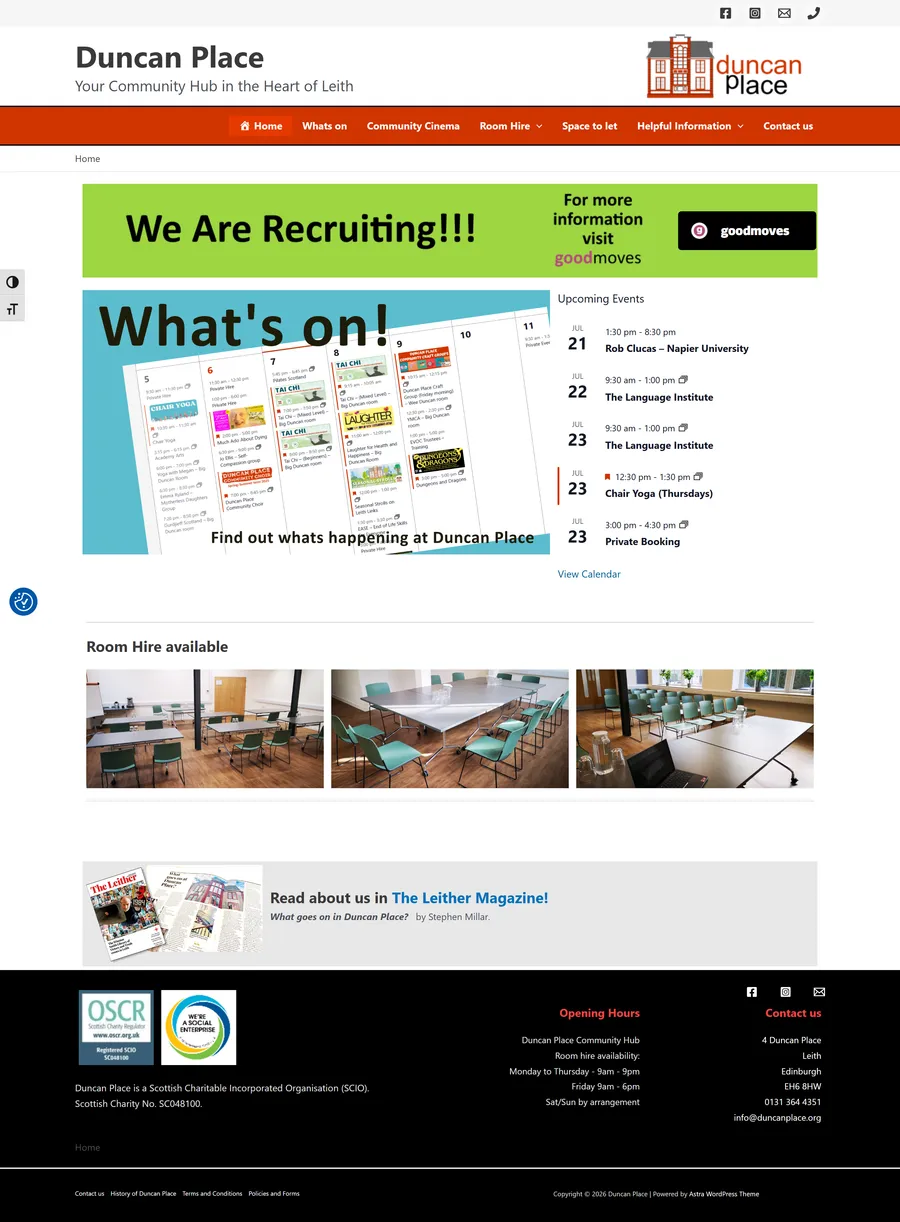
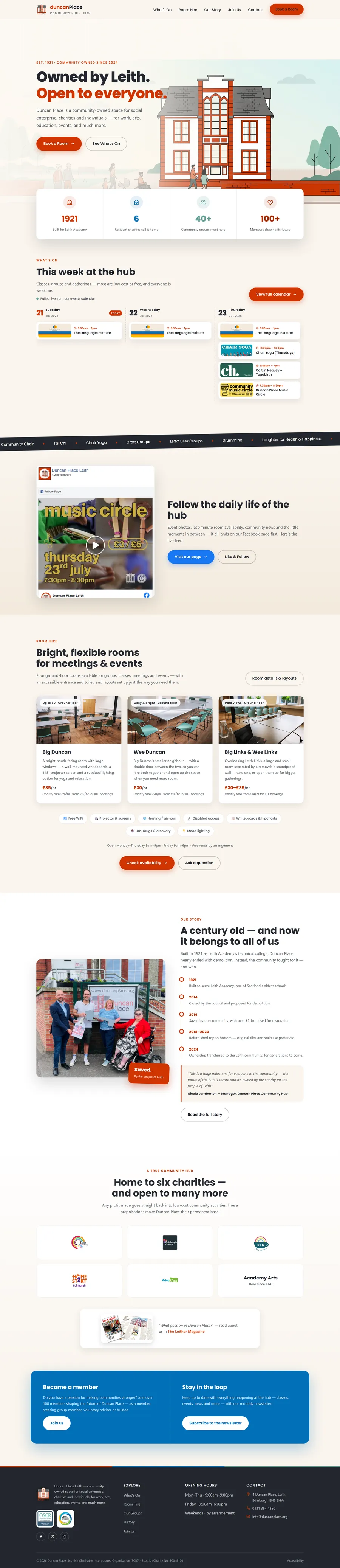
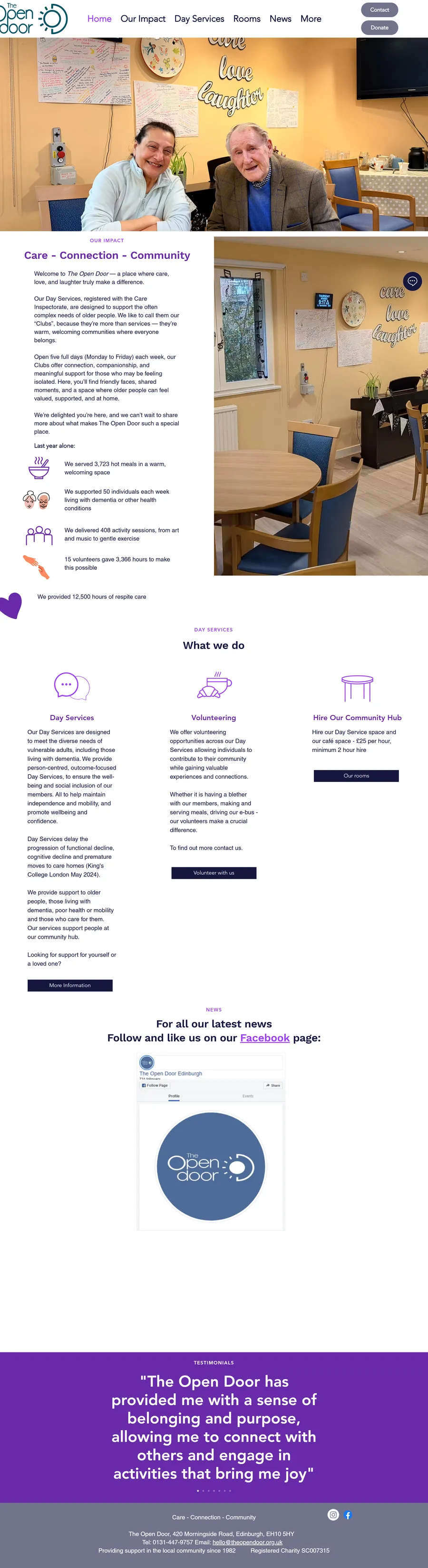
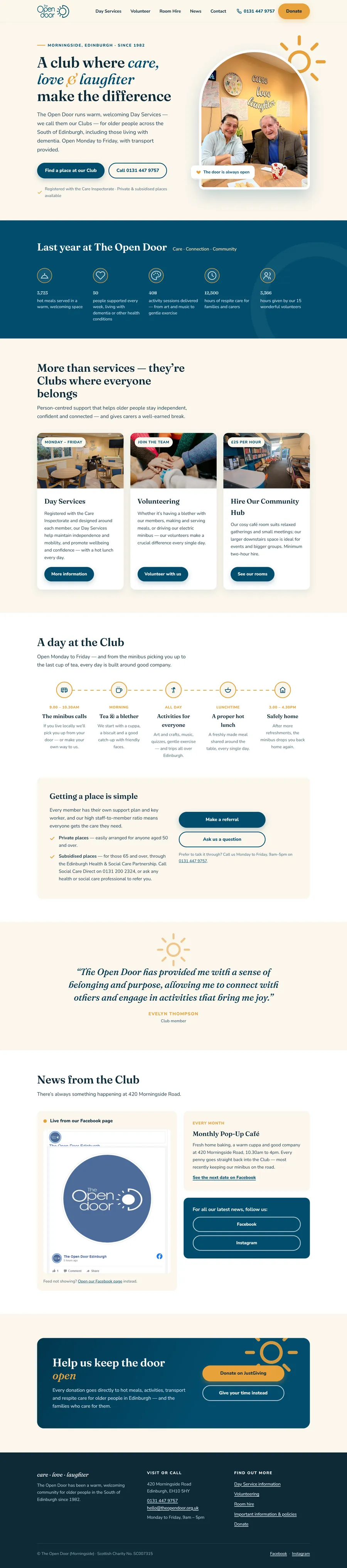
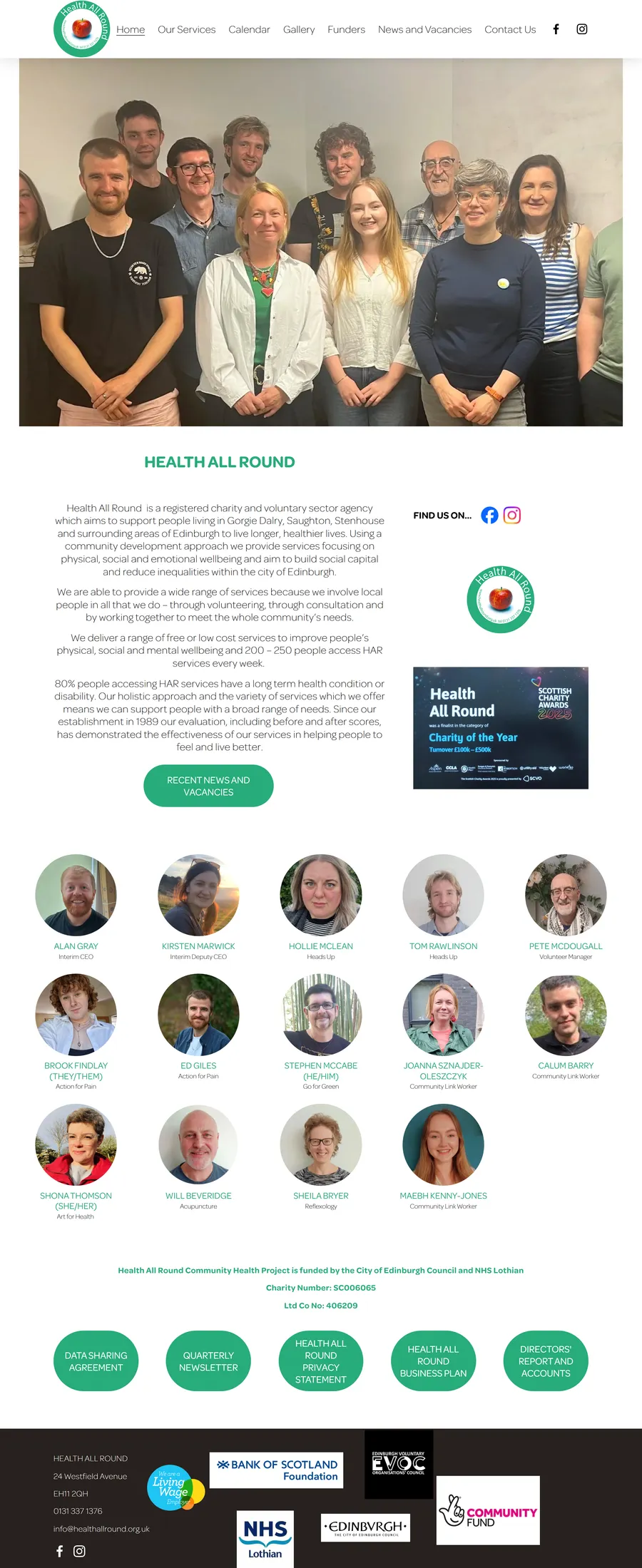
Five charity homepages I've rebuilt
Here are homepage rebuilds I've made — every one of them built on the charity's real content, to show rather than tell. And, at the end, a booking system for a venue that needed more than a website. Your redesign would cover your whole website, homepage included.
On a computer, hover over any screenshot to scroll through the whole page — and click it to visit the real site. The stills don't show the animation, so the live sites are worth a look.
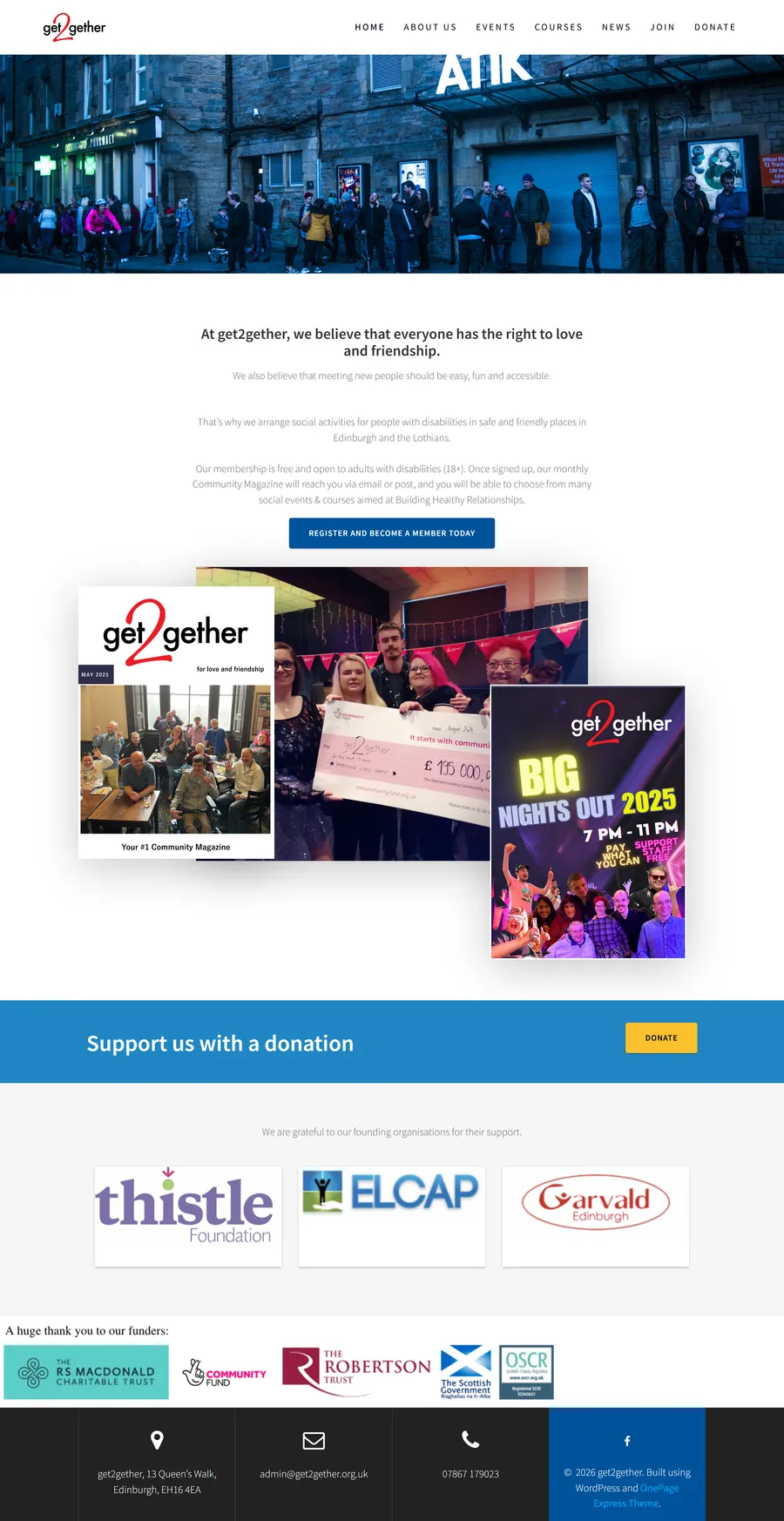
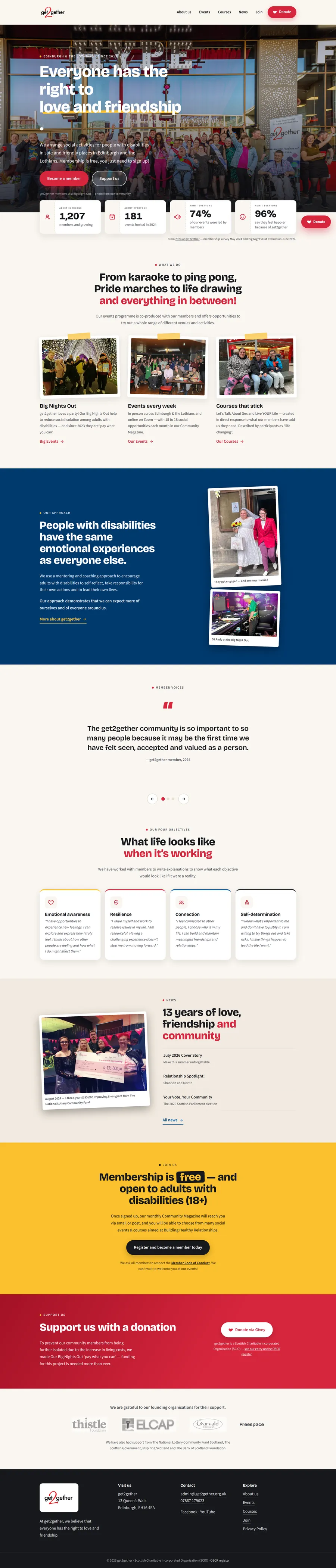
Street Fit Scotland streetfitscotland.org
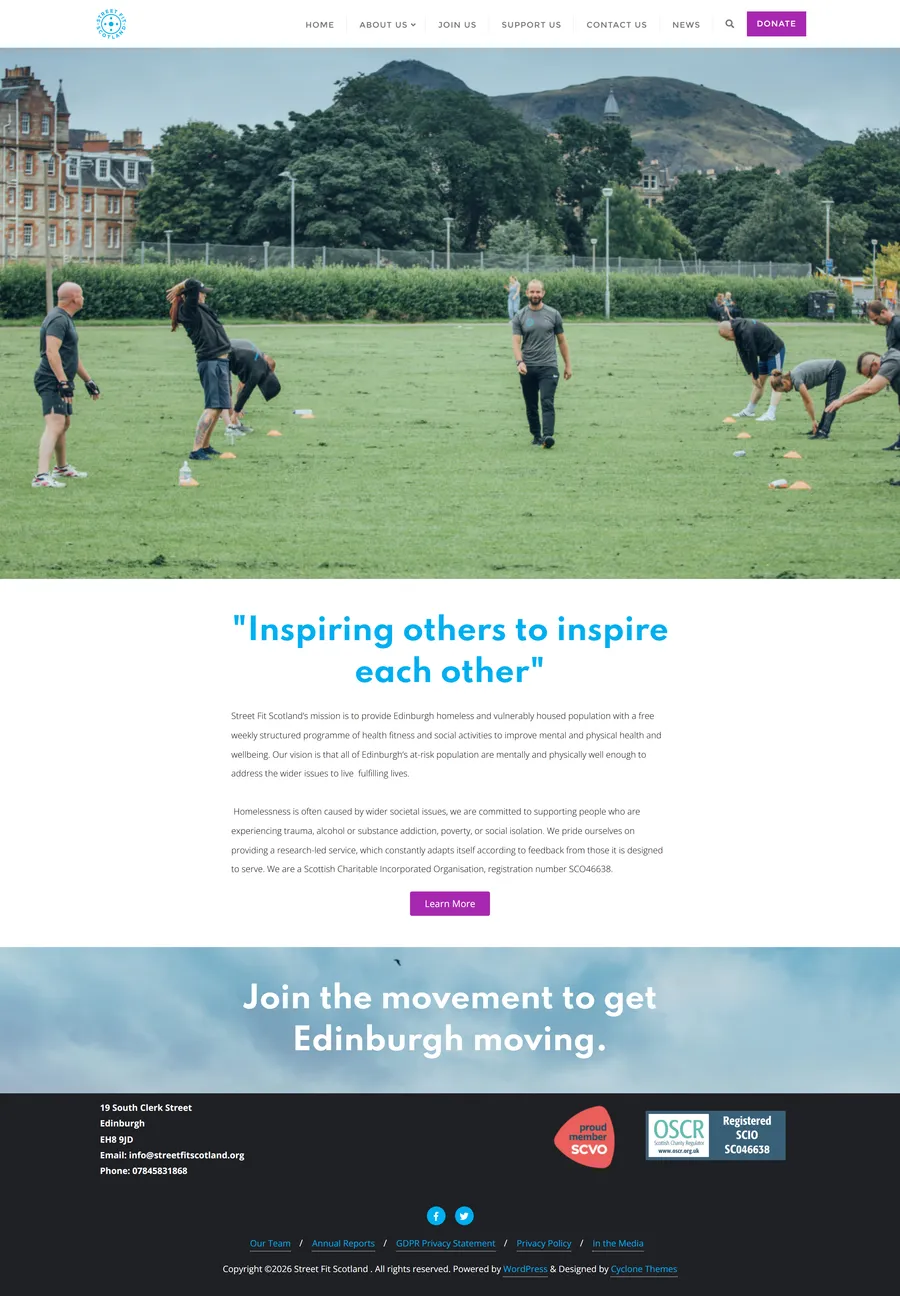

Three more redesigns
Duncan Place duncanplace.org
The Open Door theopendoor.org.uk
Health All Round healthallround.org.uk

The Salisbury Centre salisburycentre.org Booking system
Six rooms nobody could book online, and what I built insteadNot a redesign — a booking system. This wellbeing centre hires out its rooms, so I built the system that runs them: a hirer picks a slot, pays for it, and the whole building's diary updates behind them.


If you mostly live on Facebook
A Facebook page is not a website
Plenty of small charities run everything through a Facebook page, and for the people already following you, it works. It stops working the moment someone who has never heard of you needs to check you out. A funder, a GP, a parent, a volunteer. They don't scroll. They look for one answer, and then they decide.

-
Facebook
A funder checking you out finds photos, in date order, and has to piece you together.
Your own siteThey find what you do, who runs it and last year's accounts — inside a minute.
-
Facebook
Google can show your page, but not the answer someone actually searched for.
Your own siteA page for each thing you do, written for the words people really type.
-
Facebook
The page, the followers and ten years of history sit on someone else's platform, under their rules.
Your own siteThe pages, the words and the web address belong to the charity. No platform's rules apply.
Keep the Facebook page. It's good at the day-to-day — the photos, the reminders, the thank-yous — and I wouldn't ask you to drop it. It just can't be your front door. The two work together: Facebook to talk to people who already know you, a website for everyone who doesn't yet.
And if a Facebook page is genuinely all you have, that's fine. Send me the link to it instead of a web address, and I'll build you the other half.
Before you decide
Fair questions
The deal
What's the catch — will a bill turn up later?
No. The redesign is free, I set the hosting up on free tiers, and everything is yours on handover. If you ever want paid help later on, that's a conversation you'd start, not me.
Who pays for the hosting once you've handed it over?
Nobody. It runs on free accounts opened in the charity's name, and a site like yours doesn't come near their limits. The only bill is your web address renewal — the £10 to £20 a year you already pay. Here's the whole arrangement in plain English, including who holds the passwords.
How long does it take?
It depends on how big your site is. I'll give you a straight estimate before anything starts, so you're never guessing. Either way, your part takes minutes.
Are we too small?
Small is rather the point. This offer exists because small charities rarely have the money or the spare hands for a job like this — that's the gap I'm trying to fill. If anything, the smaller you are, the more this is for you.
We're mostly on Facebook — is this still for us?
Yes, and you're exactly who I'd like to hear from. Keep the page; it's good at what it does. A website does the other job — the one a funder or a stranger needs done. Here's the difference, side by side. Send me your Facebook link and I'll work from that.
What if we don't like it?
Then you keep your old site and we part friends. No obligation was the deal from the start. You lose nothing by finding out.
Who owns it, who runs it
Who owns our web address and logins — and how would we know?
Worth checking before anybody rebuilds anything. On many charity sites the domain and hosting sit in a personal account, under an email nobody reads, on a card that expired two treasurers ago. Whose name is yours in, and who gets the renewal reminder? What I set up goes in the charity's name.
Nobody here is technical — who updates it afterwards?
You do — you click the page, type your change and save. That's what the editor is for — every site I've rebuilt has one built in. If you can write an email, you can update your website.
A volunteer looks after our site — does this put them out of a job?
No. Most charity websites are somebody's favour — and favours are hard to keep asking for, so the small fixes quietly stop getting made. The new one is built so anyone can edit it, your volunteer included. If they'd like to be part of the rebuild, I'll work alongside them.
Aren't we just swapping one person we depend on for another?
Fair question. You edit the pages yourself, on the page, with no second system to learn. The hosting and the web address are in your name, not mine. Everything comes out as ordinary files any developer can pick up. I'd rather be easy to leave than hard to replace.
The changeover
What happens to our current website while you work?
Nothing. Your current site stays live and untouched while I build the new one alongside it. Nothing switches over until you say so.
We're on WordPress (or Wix, or Squarespace) — how hard is it to move?
Rarely impossible, but never even. The words and pictures usually come out; the design doesn't. What people forget is the web addresses — ten years of pages supporters have linked to only survive if somebody carries them across. I do, at the same addresses.
Send me your web address. That's the whole ask.
Taking 3 UK charities. No cost. No obligation. You keep the design either way.
Thanks — I'll be in touch within one working day.
I'll take a first look at your site before I reply, so you'll hear something useful, not a form letter.